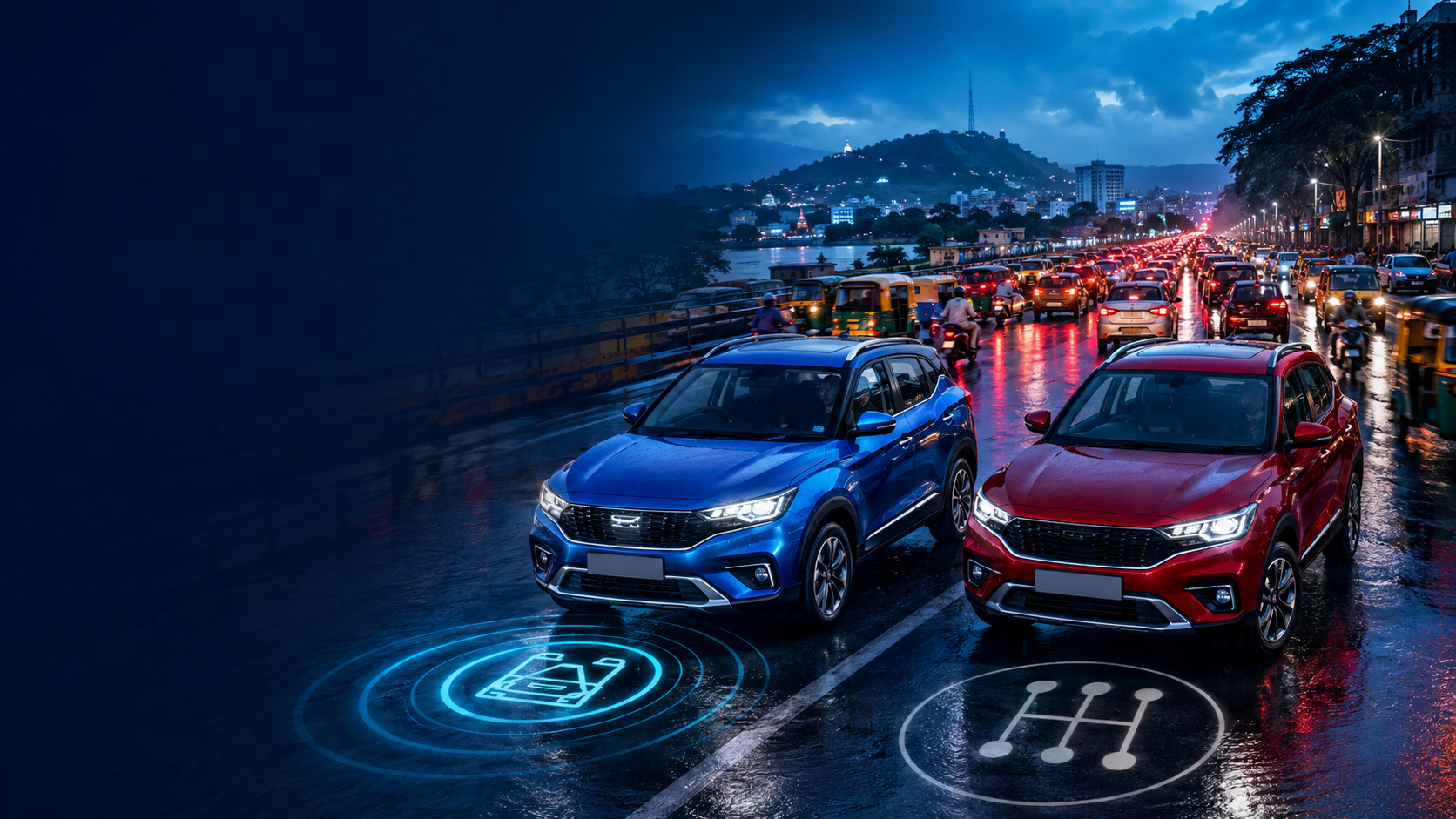
Petrol vs CNG vs EV vs Strong Hybrid: Which Car Should You Buy in 2026?
There is no universal “best fuel” anymore. In 2026, the smartest choice depends less on what is fashionable and more on where you park, how far you drive, how often you travel outside the city and how long you plan to keep the car.
Short answer: Choose petrol for simplicity and lower usage; CNG for high running when refuelling is convenient; an EV when you can charge reliably at home or work and most trips fit its range; and a strong hybrid when you want high city efficiency without changing your refuelling habit or depending on chargers.
The 60-second answer
Petrol
Low-to-moderate running, easy refuelling, mixed use and buyers who do not want charging or CNG-route planning.
CNG
Strong running-cost case when a station sits conveniently on your daily route and boot compromise is acceptable.
EV
Excellent city experience and potentially low energy cost if you have dependable overnight charging.
Strong Hybrid
Efficient city driving with petrol-station convenience and no requirement to plug in.
The mistake to avoid: Choosing only from claimed mileage or range. Your infrastructure—parking, charging, CNG access and regular routes—can matter as much as the powertrain itself.
Petrol vs CNG vs EV vs Strong Hybrid at a glance
| Factor | Petrol | CNG | EV | Strong hybrid |
|---|---|---|---|---|
| Purchase price | ●●●● | ●●● | ●● | ●● |
| Energy/fuel cost potential | ●● | ●●●● | ●●●●●* | ●●●● |
| Refuelling convenience | ●●●●● | ●●● | ●●●* | ●●●●● |
| City efficiency | ●● | ●●●● | ●●●●● | ●●●●● |
| Long-distance simplicity | ●●●●● | ●●● | ●●● | ●●●●● |
Indicative decision scores, not model specifications. *EV energy-cost advantage assumes favourable charging access.
Petrol: still the easiest answer for many buyers
Petrol can look old-fashioned beside EVs and hybrids, but simplicity has value. The purchase price is often easier to enter, refuelling takes minutes, long-distance travel requires almost no infrastructure planning and the powertrain works for buyers with irregular usage.
Petrol makes sense when…
- Your monthly running is relatively low or unpredictable.
- You take frequent spontaneous highway trips.
- You do not have dedicated parking or dependable home charging.
- CNG stations are not convenient on your normal routes.
- You value straightforward purchase economics over maximum efficiency.
The weakness is obvious: every kilometre continues to depend on petrol, so high-running owners feel fuel-cost increases much more than low-running owners.
CNG: excellent economics—if the station is where you need it
CNG can offer a compelling running-cost proposition for commuters and fleet-like private usage. India had 9,026 CNG stations across 312 geographical areas as of June 2026, according to PNGRB. But national growth does not mean equal density everywhere.
That geographic difference is critical. A CNG station that requires a recurring detour or a long queue turns cheap fuel into a time cost.
The trade-offs
Depending on the model, the cylinder can reduce usable boot space, and performance in CNG mode can be lower than petrol mode. The higher purchase price also means a low-running buyer may take years to recover the premium.
Assam check: PNGRB's March 2026 state-wise report listed 45 CNG stations in Assam. Map the stations you will actually use before putting CNG at the top of your shortlist.
EV: the best experience can begin at home
The biggest EV advantage is not merely that electricity can be cheaper than petrol. It is the ability to start many mornings with the car already charged—without visiting a fuel station at all.
India's public network has also grown quickly. In July 2026, the Ministry of Heavy Industries reported 52,718 public charging stations, of which 16,561 had fast EV chargers for cars.
But home charging changes the equation
An EV owner with a fixed parking spot and reliable overnight charging lives a very different ownership experience from someone who depends almost entirely on public chargers. Public charging is useful; home charging is what can make the routine effortless.
2026 rule: Don't ask only “What is the EV's range?” Ask “Can I reliably charge where the car sleeps, and are compatible fast chargers available on the two or three long routes I actually use?”
Strong hybrid: electric assistance without plugging in
A strong hybrid combines a petrol engine, electric motor and battery, with the vehicle managing when to use each source. The battery is replenished through the hybrid system rather than requiring the driver to plug the car into a charger.
Maruti Suzuki describes its strong-hybrid system as capable of electric-only operation in appropriate conditions, along with improved fuel efficiency and electric-motor assistance. Its current technology page lists, for example, a claimed 27.97 km/l for the Grand Vitara strong hybrid and 22.16 km/l for the Invicto.
The compromise is mainly purchase price. A strong hybrid needs enough running—and enough fuel saving over your alternative—to justify the premium. It is therefore especially attractive to buyers who want efficiency but cannot or do not want to build their routine around charging.
Which powertrain fits your life?
This is a decision aid, not a sales recommendation. Change the answers to see how the priorities shift.
Compare indicative energy cost per kilometre
Enter your local prices and expected efficiency. This compares the energy component on the same ₹/km basis.
Illustrative energy-cost calculator only. It excludes purchase-price differences, finance, insurance, maintenance, public fast-charging tariffs, resale value and other ownership costs.
The Assam reality check
For a buyer in Guwahati or elsewhere in Assam, national infrastructure headlines are useful—but local routine should decide the purchase.
Apartment without a fixed parking socket?
An EV may still work, but public charging becomes part of your weekly routine. Confirm charging access before booking.
CNG station on the daily commute?
CNG becomes far more attractive. If it requires a significant detour, include that time in your economics.
Frequent Upper Assam / interstate trips?
Check actual EV fast-charger or CNG-station availability on those corridors. Petrol and strong hybrid remain easiest when route flexibility dominates.
Mostly Guwahati city running?
EV and strong hybrid both become compelling because stop-go urban use plays to their strengths; CNG can also work well when refuelling is convenient.
A useful dealership conversation should begin with your usage map, not your preferred fuel: where do you park, where do you commute, which highways do you use, and how many kilometres did you actually drive in the last 90 days?
Six common buyers—and what we would shortlist first
1. 500 km/month, mixed use
Start with petrol. The lower running-cost technologies may struggle to recover their upfront premium quickly.
2. 1,800 km/month, CNG on route
Start with CNG. High usage makes fuel savings more meaningful; inspect boot space and drive it in CNG mode.
3. 50 km daily city commute + home charger
Start with EV. Overnight charging turns the daily routine into the EV's strongest use case.
4. Heavy city use, no home charging
Start with strong hybrid or CNG. Choose between refuelling access, purchase premium and luggage needs.
5. Frequent unplanned long trips
Petrol or strong hybrid. They minimise route planning and refuelling uncertainty.
6. One-car household, city + long tours
Strong hybrid deserves a close look. EV remains viable if your touring corridors have dependable fast charging.
What should matter more than the fuel badge?
Once you shortlist the powertrain, return to the fundamentals: safety, seat comfort, visibility, suspension, boot usability, service support, tyre costs, insurance, warranty, financing and how the car feels on roads you actually drive.
Human buying rule: The best powertrain is the one whose disadvantages you will notice least often—not simply the one with the longest list of advantages.
Frequently asked questions
Which is cheapest to run in 2026?
An EV charged mostly at favourable home electricity rates can have a very low energy cost per kilometre. CNG can also be economical. But energy cost is not total ownership cost.
Is strong hybrid the same as mild hybrid?
No. A strong hybrid can propel the vehicle using its electric motor under appropriate conditions; a mild hybrid mainly assists the combustion engine.
Do I need to plug in a strong hybrid?
No. Conventional strong hybrids recharge through the vehicle's engine and regenerative braking system rather than routine external plug-in charging.
Is an EV good for a one-car family?
It can be excellent when regular travel fits the vehicle's real-world range and dependable charging exists at home and on frequent long-distance routes.
Should I buy CNG for low monthly running?
Possibly, but the financial case weakens as monthly kilometres fall because it takes longer to recover the higher purchase price.
Which is best for Guwahati traffic?
EVs and strong hybrids are particularly well suited to stop-go operation; CNG can offer low running cost; petrol remains the simplest. Your charging/refuelling access and monthly distance should decide.
Don't choose a fuel. Choose a usage fit.
Shortlist the models you like, then compare their petrol, CNG, EV or strong-hybrid economics using your real monthly kilometres and routes.
Run the powertrain finderSources & fact-checking
Infrastructure, model specifications, fuel prices, electricity tariffs and policy can change. Verify current local information before purchase.
Continue exploring
Bimal Auto Agency
· Bimal Auto Prestige
Comments
Loading comments…